
The Great American Tragedy
Can't Tell Me Nothing

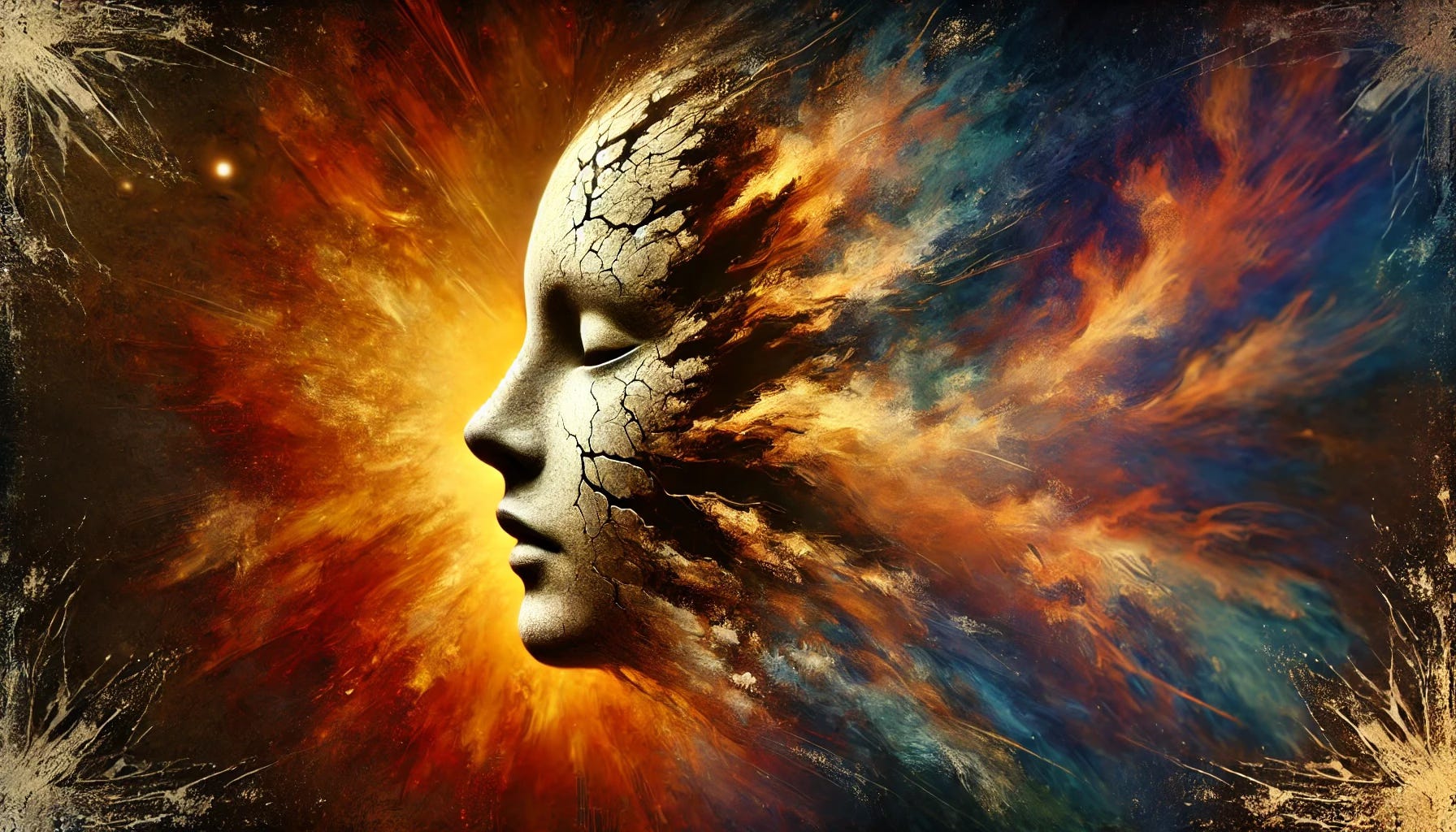
I really like this week’s entry. I mean, I always like it—I write it—but I really like this week’s. Not because it was easy, but because it was hard. Particularly in this week’s Something to Consider at the bottom, I grapple with a topic that has really be weighing on me lately and that I think has larger cultural implications…
Short introduction this week. That Consider piece really hit me in a way I didn’t expect and kinda drained it all out of me. So anyway, onto the (decidedly not) fun stuff!
Something to Listen To
I can’t recall where I came across Winter Family, probably somewhere around the release of the album that holds this song in 2007. They create the most beautiful little songs that upon a closer listening, are absolutely heartrending. Take for example, this week’s track told from the point of view of a little girl with a snow globe that, should you not pay too closer of attention (or check the title), you might think is actually a bouncy little track about a little girl with a snow globe.
While this is my favorite track from this album, I think it just might be the one that fits the best with this week’s theme.
Something to Watch
Okay, really you should watch the full thing (titled The Lure of Lucifer) over on the website for the Institute of Art and Ideas, but the below (embeddable) clip might serve to at least whet your appetite.
This past weekend, I woke up, made some coffee, and decided it was time to do some Spring Cleaning. This seemed like as good an opportunity as any to explore some of my podcast backlog, starting with this debate from a great podcast that always leaves me with something real to think about and even more so leaves me with a great sense of humility for how smart I am not.
It is a luxury, I suppose, of this great life I’ve fallen into—and that you too have likely found yourself in if you have the time to even read my little musings here—to spend time thinking about things like, well, Art and Ideas (and the Institute of).
This debate, or discussion, or whatever it is really struck me in an interesting way at an interesting time.
Something to Read
When did evil start to look so alluring? One answer might be: when goodness began to look boring.
So posits the author of this week’s piece, Terry Eagleton. In “So bad it's good: Why do we find evil so much more fascinating than goodness?,” we get a lot to consider, not the least of which is how often public speaker’s opening statements in debates (like, for example, the one above) were also opening lines in articles from The Independent many years prior.
What even is evil? Where does the line between really really bad and evil begin and end?
Does the popularity of Walter White and Tony Soprano and Ye mean much to the larger consciousness? Does art imitate life or life imitate art?
Do we need a resurgence of anti-anti-heros (you know, heroes) and, if so, is society ready for that or has the modern era ushered in an era where the absence of individual virtue is something of a virtue in and of itself?
There are examples a plenty of the latter (see below), but I am still holding out hope that we’re ready for a return to Good over Evil…
Something to Consider
I used to believe in Kanye the way Kanye believed in himself.
His music wasn’t just something I listened to—it was fuel. It was a mirror. It was a declaration: I am worth believing in.
When I needed to get locked in, when I needed motivation, when I needed to be reminded of what I was capable of, I turned to Kanye.
Like he once said, "If you’re a Kanye West fan, you’re not a fan of me—you’re a fan of yourself."
But what happens when the artist who made you believe in yourself becomes someone unrecognizable?
The Kanye I Knew
I was there for The College Dropout tour, crammed into The Pageant in St. Louis. I was there when he stood on that floating stage during Saint Pablo. I was even lucky enough to be at the Kanye West Presents: Jesus Is King event in Detroit.
From The College Dropout through Ye, I know nearly every word to every song. His music was my go-to for confidence, ambition, and energy.
I defended him when he said Beyoncé should’ve won that VMA.
I dismissed the backlash when he claimed he "made Taylor Swift famous."
I even waved off the controversy when he called slavery "a choice."
"Name one genius that ain't crazy," he said. And for a while, that was enough of an excuse.
But now?
Now, I find myself searching for YouTube videos that don’t send him monetization.
Now, I find myself wondering where the line is—when does an artist’s downfall make their art impossible to return to?
The Breaking Point
The cracks were always there.
In 2007, his mother—his guiding force—died after elective surgery, made possible by the very success he had fought for. That tether broke.
In 2008, his engagement ended. He turned the heartbreak into an album (808s & Heartbreak) that changed the sound of music for the next decade.
In 2009, the world turned on him after he crashed Taylor Swift’s VMA speech. He disappeared. It could’ve been the end.
Instead, he came back with one of the greatest albums ever made:
My Beautiful Dark Twisted Fantasy.
He was unstoppable. Until he wasn’t.
The next albums—Yeezus, The Life of Pablo, Ye—were unpredictable, but still undeniably Kanye. And then... something shifted.
He fell into extreme Christianity.
He spiraled through bizarre, inexplicable public behavior.
And then, somehow, he ended up a full-blown Nazi sympathizer.
From the top of the world to the bottom of the dumpster.
A fall so spectacularly self-inflicted it could only belong to someone who once touched the very top.
What Do You Do When Your Hero Becomes the Villain?
At some point, my love for Kanye became complicated. Then painful. Then impossible.
His music is still genius—but he himself is toxic, destructive, beyond defense.
How do you reconcile that?
Nick Cave argues that you don’t have to separate art from the artist to appreciate the art—that the very reprehensibility of an artist is part of the recipe that led to their genius.
I agree, but I don’t know that that applies here.
Because the Kanye I loved and the Ye that exists now are not the same person.
Kanye was a mama’s boy from Chicago who manifested his own success, walking around Def Jam with a boombox, rapping his own demos to uninterested execs. He willed himself into existence.
Ye is… something else entirely.
And the deeper truth is this: Kanye was always going to become Ye.
The foundation of his greatness—the relentless confidence, the unwillingness to listen to anyone, the messianic self-belief—was always built on unstable ground.
We just didn’t see it until the whole thing collapsed.
So What Does That Say About Us?
If Kanye’s music once taught me to believe in myself… what does it mean when the man behind that music falls apart?
Is the message tainted?
Or does it stand on its own, separate from the man who once spoke it?
I don’t know.
But I do know this: Kanye is gone. And we are left with Ye.
Both share the same root.
And that root is broken.
With all that said: Nobody whose mind is at peace ends up here.
Nobody whose world is intact chooses self-destruction over self-belief.
Nobody who is happy turns to hate.
Kanye is deserving of scorn, criticism, and rejection.
But he is also deserving of compassion.
You don’t have to have followed him too closely to know this all started with the loss of his mother. I don’t believe he ever recovered.
Maybe the guilt pushed him to reject the people who tried to help.
To reject the love of the mother of his children.
To spiral publicly, pushing away his kids and whatever remaining fans still held on.
I’m not here to forgive him.
I don’t think I can.
But I can say this: I understand how he got here.
Kanye West is the great American tragedy.
We all lost something when we lost Kanye West.
My heart goes out to his collaborators, his friends.
It goes out to Kim.
It goes out to his kids—who have to live in this shadow.
But it also goes out to Kanye.
Because somewhere in there, he’s still just a kid from Chicago missing his mama.
And that might be worth something, too.